For best experience please turn on javascript and use a modern browser!
You are using a browser that is no longer supported by Microsoft. Please upgrade your browser. The site may not present itself correctly if you continue browsing.

The mission

The HHP Centre is devoted to critical historical and empirical research in the study of esotericism, or, as the name of our Centre goes, the History of Hermetic philosophy and related currents. Our research covers the entire history of esotericism, from Mediterranean antiquity to the present.Reflecting the field’s interdisciplinary nature, our researchers work from perspectives ranging from history of science and intellectual history to religious studies and art history. As part of the Faculty of Humanities at the University of Amsterdam, our research falls under the umbrella of the Amsterdam School of Historical Studies (ASH).

Facilities

The presence in Amsterdam of the famous Bibliotheca Philosophica Hermetica, situated at the Embassy of the Free Mind, and of the rich material of the Amsterdam University Library’s Special Collections (Bijzondere Collecties) provides important research facilities for our staff. The HHP’s strong emphasis on historical research into primary sources is perfectly matched by these libraries and collections.

Journals, book series, and international activities

The European Society for the Study of Western Esotericism (ESSWE) was founded in 2005. The staff at the HHP Centre participated in the foundation and continues to be deeply involved with the further development of this international learned society. Our staff has also been instrumental in setting up and running the leading peer-reviewed journal devoted to esotericism, Aries, and the Aries Book Series, both published by Brill under the auspices of the ESSWE. The HHP Centre is thus an intrinsic part of a larger international network that promotes, creates and distributes peer-reviewed academic research in the interdisciplinary field of esotericism.
Completed PhD dissertations
  • Dr. Mriganka Mukhopadhyay (2025): "The Theosophical movement in colonial South Asia and its global entanglements 1882-1942"

    This dissertation explores the Theosophical movement in colonial Bengal and the role of Bengali Theosophists in the global history of religion between the late nineteenth and mid-twentieth century. The Theosophical movement’s rise in South Asia must be studied against British imperialism and global capitalism. In this respect, this work proposes a new theoretical framework, called the “Theosophical Capital,” for understanding the utilisation of colonial resources.

    The author suggests that the theory of Theosophical Capital provides a framework to understand how the Theosophical movement utilised various social, cultural, and financial resources from Bengal and elsewhere in colonial South Asia to develop itself and thrive in the global religious marketplace. While on the one hand, the movement received financial and logistical support from the colonial bourgeoisie to develop its organisation in South Asia, on the other hand, with the help of native Theosophists, it promoted Indian traditions, such as Tantra, Yoga, and Vedanta, and translated pre-modern Indian texts to strengthen its position as a champion of ancient wisdom in the global occultist discourse.

    Simultaneously, the colonial middle class used the Theosophical movement as their social and cultural capital for political activities and literary works and to develop global intellectual networks. Thus, it could be said that the theory of Theosophical Capital is a dual-purpose tool which helps us understand how the Theosophical movement and the colonial Bengali middle class utilised each other for their mutual benefit. The work provides a new perspective to the study of esotericism in a global context.

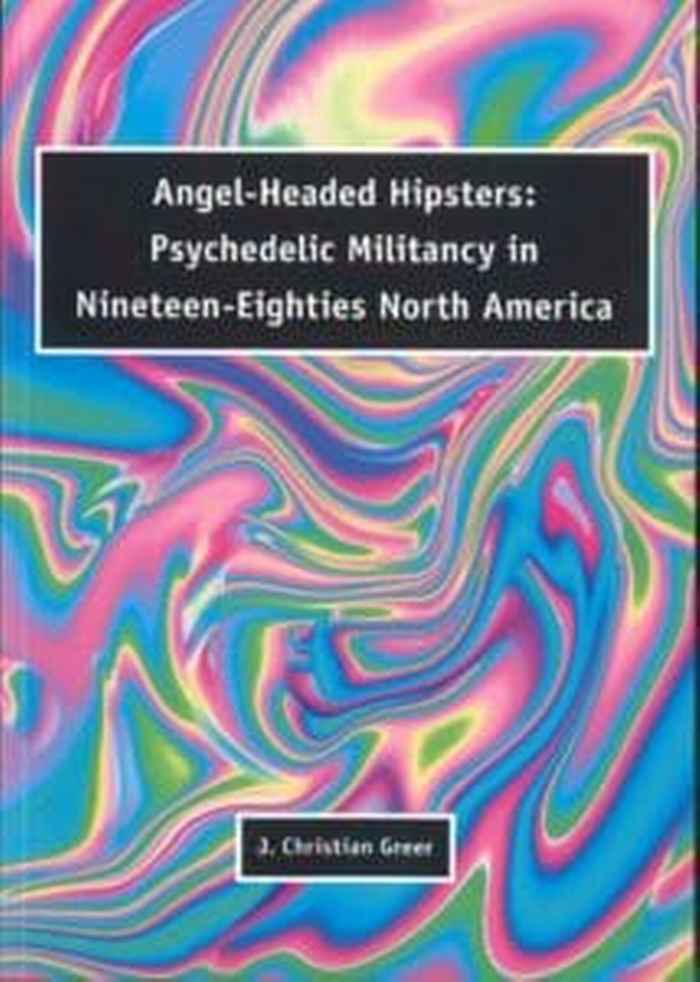
  • Dr. J. Christian Greer (2020): “Angel-Headed Hipsters: Psychedelic Militancy in Nineteen-Eighties North America”

    J. Christian Greer was awarded his degree with the highest distinction of the Dutch grading system (cum laude, approx. top 5% of PhDs) after defending his dissertation on March 11, 2020.

    Summary
    The psychedelic dimension of religious experience occupies a marginal position in the scholarship of American culture. For the last seven decades, scholars have viewed the psychedelicist church movement as, variously, an excuse for taking illegal drugs, an inauthentic mode of religious fellowship, and a purely oppositional “counter-culture.” More recent scholarship challenges these interpretations by emphasizing the legitimacy of the experiences occasioned by psychedelics. “Angelheaded Hipsters: Psychedelic Militancy in Nineteen Eighties North America” looks at the ways Cold War dissidents in the United States utilized amateur self-publication to build a grassroots movement of psychedelicist activism. Specifically, it asks how an innovative discourse of holiness centered on the use of drugs, or “psychedelicism,” developed within fanzines — uncommercial, nonprofessional and small-distribution magazines circulated in the tens of thousands during the 1980s. In order to explore this question, the dissertation focuses on the preeminent status of psychedelic fellowships (particularly the Discordian Society, the Church of the SubGenius and the Moorish Orthodox Church of America) within the literary microcosm of fanzines. Opposing both American capitalism and Soviet communism, these understudied churches mobilized the fanzine network to launch a revolutionary, or “third way” movement based on the use of mind-expanding drugs, which they construed as the only viable alternative to the nuclear destruction that then seemed inevitable.

    Informed by the material study of religion, the also examines the clandestine social network build by psychedelicists in response to the subsequent criminalization of their devotional practices under state and federal law. As a result of government persecution, the allied forces of psychedelicist militancy fomented the rise of the so-called “zine scene,” an alternative communication microcosm based on the participatory and decentralized exchange of homemade artworks, publications, music, and literature. Driven by the utopian potential of what was then termed “cyberspace,” the hipster militants of the zine scene eventually migrated away from epistolary exchange to pioneer online communication in the 1990s. A historiographic intervention on behalf of ephemeral material culture, my dissertation ultimately traces the “digital turn” towards home-computing back through the earlier social media paradigm of fanzine exchange.

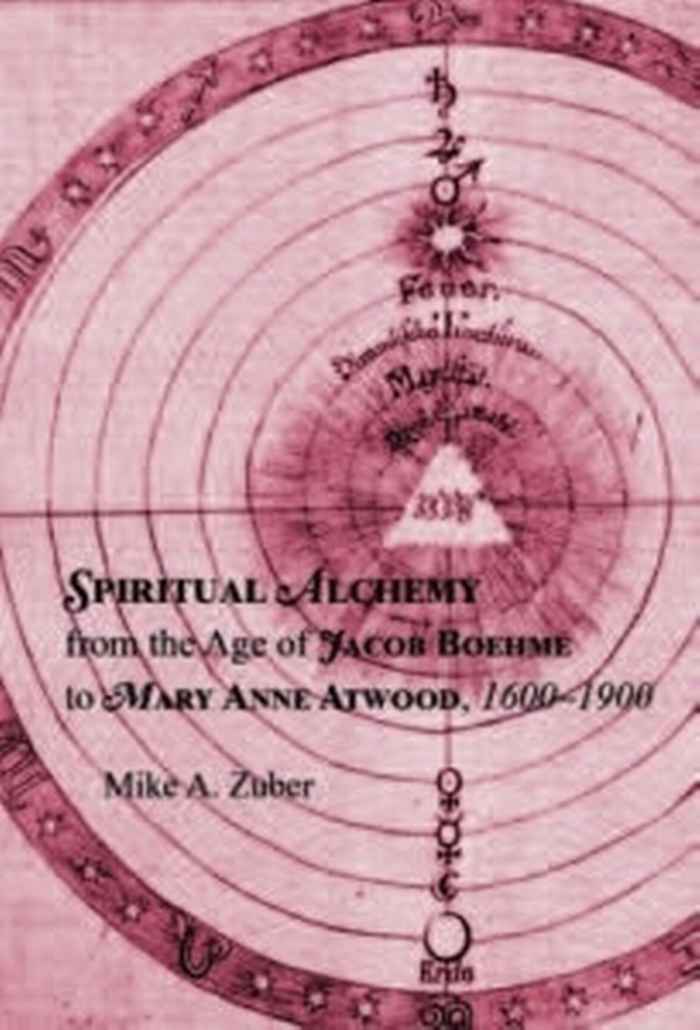
  • Dr. Mike A. Zuber (2017): "Spiritual Alchemy"

    Mike A. Zuber (1987) was awarded his degree with the highest distinction of the Dutch grading system (cum laude, approx. top 5% of PhDs) after defending his dissertation on June 20, 2017. The dissertation is titled Spiritual Alchemy from the Age of Jacob Boehme to Mary Anne Atwood, 1600–1900. 

    Summary
    ‘Spiritual alchemy’ is a contested term that is often accompanied by far-reaching claims about the presumed essence of alchemy.
    Despite the troubled past of this term, this study reclaims ‘spiritual alchemy’ as a precisely definable category for historical research. The term stands for the practical pursuit of inward but physically real transmutation, its goal being the reversal of the Fall as a preparation for the resur-rection of the dead at the Last Judgment.

    Spiritual alchemy in this sense first developed around the turn of the seventeenth century, due to the confluence of two important currents: German mysticism and alchemical Paracelsianism. In underground networks of religious dissenters, mystical and spiritualist as well as alchemical and Paracelsian writings circulated side by side. In this context, spiritual alchemy eventually reached Jacob Boehme. According to his understanding, laboratory alchemy was but a lesser, grossly material reflection of spiritual alchemy.

    Drawing extensively on the manuscript record, this study traces how Boehme’s spiritual alchemy ultimately came to shape Mary Anne Atwood’s enduringly popular Suggestive Inquiry into the Hermetic Mystery. It appears that a formerly minor strand of early-modern alchemy exerted crucial influence on this first major presentation of modern alchemy.

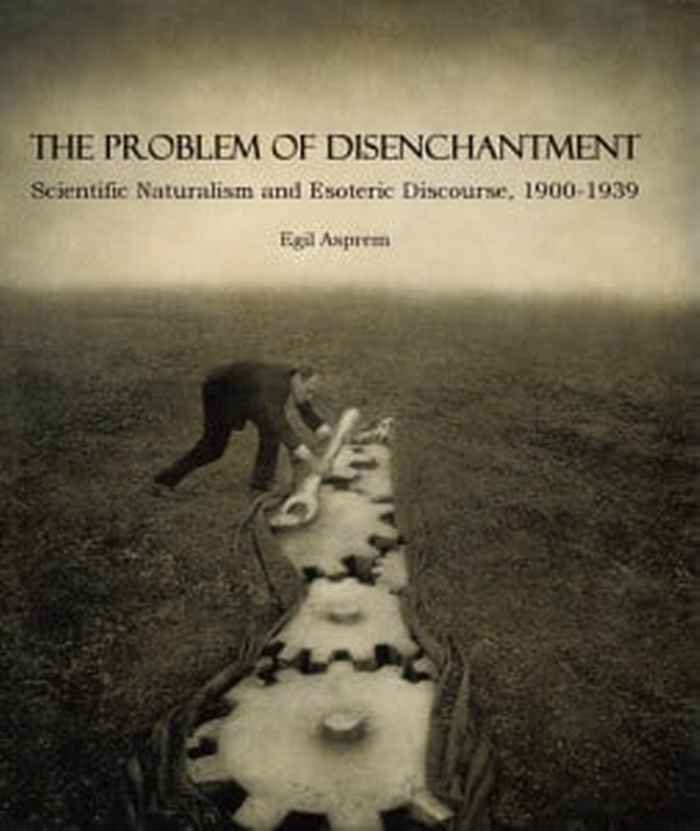
  • Dr. Egil Asprem (2013): "The Problem of Disenchantment"

    Egil Asprem (1984) was awarded his degree with the highest distinction of the Dutch grading system (cum laude, approx. top 5% of PhDs) after defending his dissertation on February 5, 2013. The dissertation is entitled "The Problem of Disenchantment: Scientific Naturalism and Esoteric Discourse, 1900-1939". 

    Summary
    The dissertation presents a new perspective on Max Weber’s notion of the “disenchantment of the world”. According to Weber, the disenchantment process was driven primarily by the modern natural sciences, leading to the disappearance of “magic” and the absolute separation of the spheres of science and religion. Combining history of science with the history of religion and esotericism, this work demonstrates that the modern natural sciences, pace Weber and his interpreters, cannot easily be described as having led to a disenchantment of the world. Instead, we find a number of significant overlaps between science, theology, and broadly “esoteric” outlooks, particularly in the form of “new natural theologies” and in philosophical positions defined as “open-ended naturalism”. These overlaps signify areas where individual scientists and scientific institutions (journals, lecture platforms, scholarly societies) have suggested implications of their own work that go against the technical understanding of “disenchantment” – viz., countering strict mechanism, materialism, and/or reductionism, in favour of “re-enchanted” scientific worldviews, advocating the continuity between scientific research and the value spheres of religion, metaphysics, and ethics. While such reenchantment projects are well-known from “alternative” and “New Age” circles in the post-war era, a significant find of this work is that they were predated and prefigured in the intellectual production of influential pre-war scientists, scholars, and philosophers.

  • Dr. Tessel M. Bauduin (2012): "The Occultation of Surrealism"

    Tessel M. Bauduin successfully defended her dissertation on surrealism and Western esotericism on December 20, 2012. It was entitled "The Occultation of Surrealism: A Study of the Relationship between Bretonian Surrealism and Western Esotericisim".

    Summary
    It has been said that Surrealism was nothing if not deeply involved with occultism and Western esotericism. Others claim that there was no such involvement or even that Surrealism was directly opposed to the occult and esoteric. ‘The occultation of Surrealism’ offers a fresh view of this complex and important debate that has remained unresolved until now, and seeks to account for such differing opinions about the supposedly occult character of Surrealism, specifically under the leadership of its founder André Breton. Specific elements that have found a place in Surrealism, such séances, mediums, clairvoyance, prophecy, alchemy, and the corresponding worldview that is associated with magic, are studied in depth. The esoteric indeed fascinated Breton and his fellow Surrealists, and the relationship between Bretonian Surrealism and Western esotericism is analysed within its historical context, highlighting that his dynamic relationship changed significantly over time. This study explores the way in which esoteric currents were significant for Surrealism in particular ways and during certain periods of time, touching among other things upon the surrealist vogue for Spiritualist séances in the early 1920s, Breton’s demand for ‘the profound, veritable occultation of Surrealism’ in 1929, and surrealist art-magic in the 1940s. As the decades progressed, esotericism increasingly rose to prominence in Surrealism, until Breton would declare it an essential part of the surrealist life; even so, as this study argues, it always remained subservient to the overarching concerns of the surrealist movement.

  • Dr. Marieke van den Doel (2008): “Ficino en het voorstellingsvermogen”

    Marieke van den Doel (1970) became the first to defend her doctoral dissertation at the HHP, on 12 February, 2008. Van den Doel’s dissertation was entitled "Ficino en het voorstellingsvermogen. Phantasia en imaginatio in kunst en theorie van de Renaissance" (Ficino and the Power of Imagination: Phantasia and Imaginatio in Renaissance Art and Theory).

    Summary
    Artists such as Michelangelo and Botticelli made extensive use of the views of the Florentine Neoplatonist Marsilio Ficino (1433-1499) for several of their most famous works. In particular, Ficino’s ideas concerning inspiration (furor), love and imagination played a major role. The significance of Ficino for Renaissance art and art literature was a popular topic for art historians from the 1930s through to the 1970s, but in the subsequent period the extent of the influence he exercised has been much questioned. New source material, revised dating and close reading of relevant texts now show this discussion in a quite different light.